
Chronic pain isn’t always just physical. For many men, unprocessed stress, grief, or anger can quietly show up in the body as headaches, back pain, or constant tension.
You're Not Just Imagining It
If you’ve been dealing with headaches, back tension, or other ongoing aches with no clear medical explanation, you’re not alone. A lot of men I meet come in frustrated, even dismissed, after years of chasing solutions. What they often don’t realize: their body might be expressing what their mind has been holding in — unspoken grief, unrelenting stress, or suppressed anger. It’s not “all in your head.” It’s how your nervous system and body work together.
This kind of unrelenting stress is exactly what the Burnout & Career Transitions page speaks to — when the pressure has been building for a long time with no real outlet.
Why This Matters for Men Specifically
High-pressure jobs, financial stress, and family responsibilities pile up without a healthy outlet for a lot of men. Talking about emotions isn’t something most of us were taught — so the body often speaks instead.
What's Really Going On in Your Body
Your brain doesn’t separate emotional and physical pain as neatly as you’d think. The same neural circuits that process a stubbed toe also light up when you experience rejection, grief, or shame.
When you carry unprocessed emotional pain, your body can stay in a heightened stress state. Over time, that can disrupt your immune system, fuel inflammation, and make you more sensitive to pain signals. This isn’t about blame — it’s about understanding that your pain is real, and emotional stress might be part of the picture.
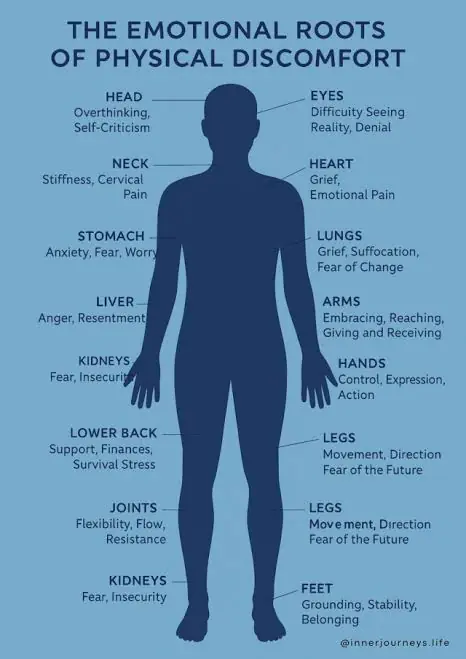
Why Suppressing Stress Can Make You Sick
There’s a well-documented link between chronic, unacknowledged stress and physical illness — including how the habit of “being nice,” avoiding conflict, and never expressing anger can quietly take a toll on health over time. Gabor Maté’s work (referenced below) explores this connection in depth if you want to go further.
Quick Self-Check: Where Does Your Body Show Emotional Distress?
Take a moment to scan your body:
- Which muscles are always tense?
- When did that tension first appear?
- What was happening in your life at the time?
- Which emotions did you avoid expressing?
This simple exercise can reveal whether your pain might have emotional roots worth exploring.
What Actually Helps — Beyond Medication
When pain has an emotional component, treating only the body can feel like chasing symptoms. Medical care matters, but a lot of men find deeper relief when they address the physical and emotional layers together:
- Somatic awareness — noticing where emotions live in the body without trying to immediately “fix” them
- Stress release practices — walking, stretching, yoga, or breathwork to signal safety to your nervous system
- Emotional expression — talking things through, journaling, or other outlets that keep emotions from getting “stuck”
- Counselling support — exploring what your pain might be telling you, at your pace, without judgment
This isn’t about deciding your pain is “all mental.” It’s about adding tools that can make a real difference.
How We'll Work Together
We’ll explore the possibility that your chronic pain isn’t just a medical issue — it might also be a messenger. I’ll help you identify patterns like overcommitment or unacknowledged stress, using approaches like Acceptance and Commitment Therapy, Internal Family Systems, and somatic awareness.
You set the pace. If talking about feelings is new for you, that’s fine — we start wherever you’re comfortable.
Honest conversation.
Real strategies.
No judgment.
Common Questions
Does this mean my pain is "all in my head"?
No. Your pain is real. Emotional stress can change how your nervous system processes pain — which means addressing emotions can be part of real, physical relief.
How long until I feel a difference?
It varies. Some men notice change in a few sessions; for others it’s gradual. The goal isn’t a quick fix, but lasting change.
What if I've never had a big trauma?
Chronic stress, subtle emotional neglect, or years of suppressing feelings can still impact your body. You don’t need a dramatic event for this to be relevant.
Will this replace my medical care?
No — this complements it. Keep seeing your doctor while we explore the emotional side.